Cute Cat: A Minimalist Font for Modern Designers
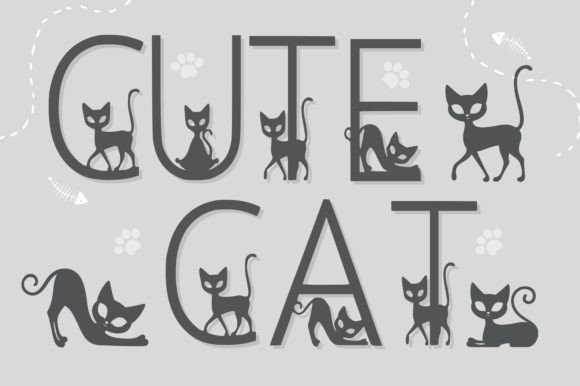
When you encounter a typeface like Cute Cat, it’s immediately clear that it solves a specific problem: how to inject personality into a design without cluttering it. In a market saturated with overly ornate scripts and heavy display fonts, this typeface stands out by doing less. It is a premium font built on a foundation of simplicity, making it an essential asset for creators who value whitespace and legibility. The visual style is characterized by clean, geometric lines and a soft, rounded finish. It avoids the jagged edges of grunge fonts or the complex ligatures of formal calligraphy. Instead, it offers a modern, sans-serif approach that feels friendly and approachable. The letterforms are balanced and consistent, providing a rhythmic flow that is easy on the eyes. This isn't just a display font; it is a versatile typeface designed to adapt to various mediums, from digital screens to high-resolution print.
The personality of this font is subtle yet distinct. It carries a sense of warmth and approachability, often described as having a "cute" aesthetic due to its soft terminals and open apertures. However, it avoids looking childish. The design maintains a level of sophistication that allows it to function in professional environments. For brand identity projects, this distinction is crucial. A brand needs to appear friendly to its customers but also trustworthy and competent. Cute Cat strikes this balance perfectly. It feels human and organic, likely inspired by handwritten font styles but refined into a structured digital format. This makes it an excellent choice for businesses that want to bridge the gap between personal connection and professional service. It speaks a language of modern minimalism, where every curve and line serves a purpose.
Strategic Applications for Creative Professionals
Understanding where to deploy a creative font like this is half the battle. Its clean nature makes it incredibly versatile across creative, branding, marketing, publishing, digital, print, personal, and commercial projects. For packaging design, Cute Cat excels in the beauty, wellness, and lifestyle sectors. Imagine a line of organic skincare products or artisanal stationery; the font’s clean legibility ensures that ingredient lists and instructions remain readable while the headers maintain a charming aesthetic. It works beautifully for beverage logos and labels, particularly for products targeting a health-conscious or youthful demographic. The simplicity of the design ensures that it scales well, whether it is printed on a tiny lip balm tube or a large banner.
In the realm of editorial design and web design, the font serves as a powerful tool for creating visual hierarchy. Because it is a display font with high readability, it can be used for pull quotes, subheadings, and call-to-action buttons without overwhelming the reader. Unlike complex script fonts that fatigue the eye when used in larger blocks, Cute Cat maintains its clarity. For social media graphics, where attention spans are short, this font delivers the message instantly. It pairs exceptionally well with neutral photography and minimalist layouts. Bloggers and content creators often struggle to find fonts that look good over images; this typeface’s clean edges ensure it remains legible even against busy backgrounds, making it a go-to design asset for Instagram stories and Pinterest pins.
Enhancing Brand Perception and Audience Engagement
Typography is not merely decoration; it is a psychological trigger. The choice of font influences readability, visual hierarchy, brand perception, consistency, professionalism, recognition, and audience engagement. When a small business owner selects Cute Cat, they are signaling a specific set of values to their audience. The clean lines suggest transparency and honesty, while the rounded edges evoke safety and friendliness. This modern typography approach helps brands appear up-to-date and relevant. In a crowded market, consistency builds trust. By using this font across all touchpoints—from the website header to the email signature and invitation embellishments—a business creates a cohesive visual identity that customers can instantly recognize.
Consider the impact on visual hierarchy. A well-designed layout guides the viewer's eye from the most important information to the least. Cute Cat allows designers to create bold headers that command attention without shouting. It can be styled in all caps for emphasis or used in lowercase for a softer, more conversational tone. This flexibility enhances audience engagement because the text feels like a dialogue rather than a lecture. For marketers, this is invaluable. If the copy feels approachable, the audience is more likely to read it, absorb the message, and take action. It turns static text into a dynamic part of the user experience, proving that a serif font or sans serif font choice is a strategic business decision, not just an artistic one.
Practical Guide to Implementation and Pairing
Integrating a new typeface into a workflow requires practical testing. If you are evaluating Cute Cat for a project, start by testing its font pairing capabilities. Because it has a distinct personality, it pairs best with neutral, geometric sans-serifs or traditional serifs. Try combining it with a classic sans serif font like Montserrat or a robust serif font like Lora for body text. The contrast between the structured body copy and the playful headings creates a dynamic tension that makes the design interesting. Avoid pairing it with other decorative handwritten fonts, as this will create visual chaos and ruin the visual hierarchy.
Before finalizing your choice, review the included styles and licensing. Does the font family include multiple weights? While Cute Cat is often celebrated for its standard weight, checking for a bold or light version can expand your design options. Furthermore, verify the commercial font licensing. If you are an entrepreneur selling merchandise like wall art or seamless patterns, you must ensure the license covers physical end-products. Readability testing is also non-negotiable. Test the font at the specific size it will be used. A font that looks good at 72pt on a screen might lose detail at 8pt in print. Check the kerning (spacing between letters) to ensure it looks natural. By following these practical steps, you ensure that Cute Cat not only looks good but performs well, elevating your project from a simple layout to a professional piece of modern typography.