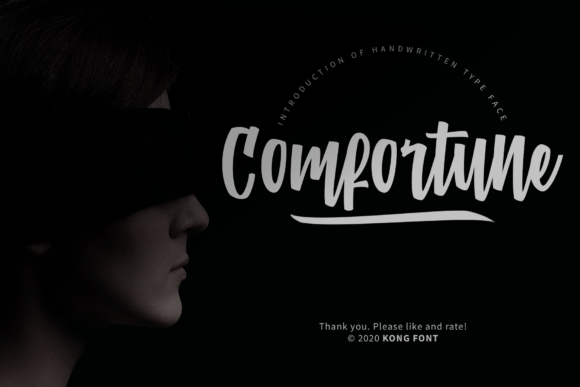
Comfortune: A Playful Handwritten Font for Modern Design
When you're deep in a design project, searching for the right typeface can feel like a quest for the perfect accessory. You need something that fits the mood, performs its function, and adds a distinct layer of personality. This is where a font like Comfortune enters the conversation. Developed by Kong Font Studio, this modern handwritten font brings a specific kind of energy to the table—one that's both relaxed and intentionally stylish. It’s not trying to be a historical revival or a stark minimalist statement; instead, it offers a warm, approachable voice for projects that need a personal touch.
Visually, Comfortune strikes a balance between casual handwriting and polished design. The letterforms have a natural, flowing rhythm, but they avoid the messy, overly distressed look that can sometimes hinder legibility. You'll notice a consistent baseline with just enough variation to feel authentic, as if penned by a steady, confident hand. The connections between letters are smooth, creating a pleasant reading experience even in longer phrases. What truly sets it apart are the thoughtful details: alternate characters and stylistic swashes that allow you to customize headlines and logos, giving each application a unique, handcrafted feel. This is where the PUA encoding becomes a practical asset, ensuring these special characters are fully accessible in virtually any design software, from Photoshop to Silhouette Design Studio.
Finding Its Place in Your Creative Toolkit
The strength of a creative font like Comfortune lies in its versatility across specific, personality-driven applications. It’s not the workhorse for body text in a technical manual, but it excels where warmth and approachability are key.
- Branding & Logo Design: For small businesses, especially those in lifestyle, wellness, food, or artisanal sectors, Comfortune can form the core of a friendly brand identity. Think boutique bakeries, yoga studios, or handmade skincare lines. It pairs beautifully with a clean sans serif font for a balanced and professional look, creating a font pairing that feels both inviting and trustworthy.
- Marketing & Social Media Graphics: In the crowded space of social feeds, a handwritten font cuts through the noise of generic templates. Use it for Instagram story quotes, Pinterest pin titles, or Facebook ad headlines to instantly add a human, relatable element. Its playful style is perfect for announcements, calls to action, and engaging with a community.
- Packaging & Editorial Design: On product labels, particularly for artisan goods, Comfortune communicates care and craftsmanship. In editorial design, it can be a striking choice for magazine pull quotes, chapter titles in a cookbook, or the header of a lifestyle blog, guiding the reader's eye and setting a specific tone.
- Digital & Web Design: While you wouldn't use it for your main navigation menu, it’s excellent for website hero sections, newsletter sign-up prompts, or accent text that needs to grab attention without overwhelming the layout. It brings life to digital spaces that might otherwise feel cold.
- Personal & Craft Projects: This is where the font truly shines for hobbyists. Creating custom greeting cards, wedding invitations, personalized gifts, or scrapbooking layouts becomes infinitely easier with a premium font like this. Its compatibility with craft cutting machines makes it a go-to tool for DIY enthusiasts.
Practical Guidance for Using Comfortune Effectively
Adopting a new display font into your workflow requires more than just liking its style. It demands thoughtful implementation to ensure it enhances, rather than hinders, your project's goals.
Evaluate the Project Fit. Before you even download, ask: Does my project need a voice that is modern, playful, and personal? If you're designing a law firm's website, this is likely not your match. But for a children's party planner or a coffee shop's seasonal menu, it's a strong candidate. Always consider your audience's expectations.
Master the Font Pairing. Comfortune, as a script font, carries a lot of stylistic weight. Pairing it with another ornate typeface will create visual chaos. The classic and effective strategy is to let it headline and support it with a neutral, highly legible serif font or sans serif font for body copy. For example, use Comfortune for a product title and a font like Open Sans or Lora for the description. This creates a clear visual hierarchy.
Leverage the Included Styles. Don't overlook the alternates and swashes. Accessing these through the glyphs panel in your software allows you to customize letter endings or create unique ligatures. This can turn a simple word into a distinctive logo design element. Test different combinations to see what feels right for your specific message.
Prioritize Readability. Even the most beautiful font fails if it can't be read. Use Comfortune at sizes where its details remain clear. It works best for short bursts of text—headlines, subheadings, labels, and logos. Avoid setting paragraphs of body copy in it, as the connected style can reduce readability over long stretches. Always print a test sheet or view a mock-up at the intended size to check for clarity.
Understand the Licensing. Since Comfortune is a commercial font, its license is crucial. The license from the source, like Creative Fabrica, will specify permitted uses. Typically, these fonts allow for both personal and commercial projects, but it's your responsibility to review the terms. This ensures your brand identity materials, client work, or product packaging are all legally compliant, protecting you and your business.
In the end, a font is a tool for communication. Comfortune is a tool designed for a specific job: to inject a dose of modern, approachable personality into your designs. Used wisely and with intention, it can become a valuable asset in your creative arsenal, helping you connect with audiences who value authenticity and style.