Mila: The Graffiti Typeface That Commands Attention
Capturing the Pulse of the Street
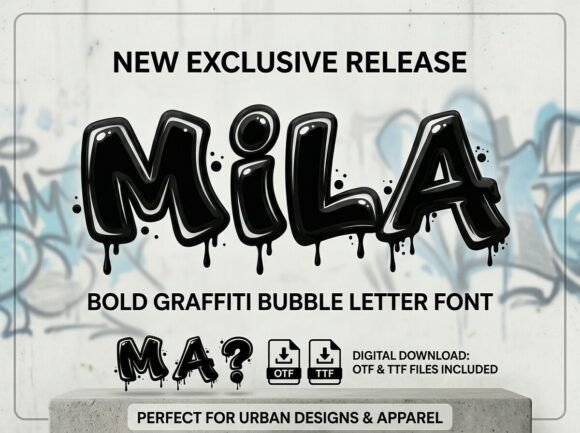
If you have ever walked through a downtown district and felt the raw energy of a massive mural, you understand the visual power of Mila. This is not just another display font; it is a digital translation of high-impact urban aesthetics. Designed to mimic the thick, rounded forms of classic bubble letters, Mila brings an aggressive, confident personality to the screen. The defining characteristic is the "fresh paint" effect. Each character features subtle drip details and glossy highlights that create a convincing 3D pop. It looks wet, vibrant, and immediate. For designers working on independent streetwear branding or edgy apparel graphics, this typeface solves the problem of finding a font that feels authentic rather than manufactured. It bridges the gap between digital precision and the chaotic beauty of street art.
Where Mila Delivers Maximum Impact
Understanding where to deploy a creative font like Mila is just as important as the design itself. Because of its heavy weight and expanded width, this typeface functions best in headlines and large-scale branding where short, punchy text is required. It is the premier choice for underground music posters, album covers, and event flyers where the goal is to stop people in their tracks.
In the realm of web design and social media graphics, Mila shines as a hero element. Think about the headers for a YouTube channel focused on urban culture, or the main title on a podcast cover art. It commands attention in a crowded feed. However, it is essential to treat this as a headline-only asset. Trying to set a full paragraph in Mila would destroy readability. Instead, pair it with a clean sans serif font for body copy to maintain a professional hierarchy. The contrast between the gritty, 3D texture of the headline and the clean legibility of the body text creates a sophisticated layout that appeals to a mature audience.
Practical Applications for Branding and Design
- Apparel and Merchandise: The "fresh paint" texture translates exceptionally well to screen printing and DTG (Direct to Garment) printing. It requires less manipulation to look "finished" on a t-shirt or hoodie.
- Logo Design: For brands targeting the skate, hip-hop, or action sports markets, Mila serves as a strong foundation for a wordmark. The glossy highlights add depth that can be simplified for smaller print runs.
- Editorial Design: Use it for drop caps or pull quotes in a magazine layout to break up dense blocks of text and inject personality into the page.
- Event Promotion: Whether it is a local block party or a music festival, the font instantly communicates the vibe of the event without needing additional illustration.
Strategic Font Pairing and Visual Hierarchy
When integrating a premium font like Mila into a larger design system, the concept of visual hierarchy becomes your best friend. You want the viewer’s eye to land on the Mila text first, then flow naturally to the supporting information. Because Mila has such a strong, stylized personality, it acts as the "loud" voice in the conversation. Your supporting typeface—the sans serif or even a simple serif font—needs to be the "quiet" voice.
Avoid pairing Mila with other decorative or handwritten fonts. This creates visual competition and makes the layout feel cluttered. Instead, look for geometric sans serifs with wide spacing. The clean lines of a font like Futura or Montserrat provide the perfect counterbalance to the organic curves of Mila. This balance is crucial for brand identity. You want your brand to look edgy, but also legible and trustworthy. By using Mila only for key touchpoints, you maintain that professional edge.
Technical Considerations and Readability
As a display font, Mila prioritizes style over extended legibility at small sizes. This is a common characteristic of high-detail modern typography. When using this typeface, you must consider the medium. On high-resolution screens, the glossy details and drip effects will render crisply. However, on low-resolution print or very small mobile screens, some of those nuances might get lost.
Always test your designs at the actual size they will be viewed. If you are designing for a billboard, the details will be massive and impactful. If you are designing for a business card, you might need to increase the tracking (letter spacing) slightly to ensure the letters don’t merge together. Furthermore, always review the licensing. Since Mila is a commercial font, ensure your license covers the specific usage you need, whether that is for physical merchandise, digital ads, or app interfaces. Using design assets correctly ensures you avoid legal headaches down the road and respect the work of the type foundry.
Making Your Mark
Ultimately, choosing a typeface is about finding a voice for your message. Mila offers a voice that is unapologetic, bold, and deeply rooted in urban culture. It is a creative font that gives designers the tools to build high-energy visuals that resonate with younger demographics and street-savvy audiences. By leveraging its 3D effects and strong silhouette, you can transform a standard layout into something that feels alive. Whether you are launching a streetwear line, designing a mixtape cover, or building a social media presence that refuses to be ignored, Mila provides the visual impact required to make your mark.